

Small Batch Organic Beauty: Myth-Busting the Future of Skincare (2026)
What if the "natural" moisturiser you've been using is actually the hidden culprit behind your persistent redness and irritation? It's exhausting to navigate a sea of high street brands that promise gentle care, only to find your skin barrier feels tighter and more reactive than ever. You've probably felt the sting of synthetic fragrances or the confusion of "greenwashing" whilst simply trying to find relief. I understand that frustration because I've seen it firsthand in my nursing practice, and it's why I believe small batch organic beauty is the clinical necessity your skin has been waiting for.
The truth is that mass-market production often sacrifices ingredient integrity for shelf-life, leaving you with diluted products and harsh preservatives. In this article, I'll help you discover why artisan skincare provides superior results for sensitive skin by prioritising unrefined, potent raw materials that truly nurture the skin. We'll debunk the myths surrounding modern production and give you the tools to understand ingredient integrity, so you can finally achieve clear skin without the fear of a reaction. By the end, you'll see how supporting sustainable UK businesses can lead to a healthier, more resilient complexion.
Key Takeaways
- Learn why limited production cycles are essential for maintaining the biological potency of unrefined botanical extracts whilst ensuring maximum freshness.
- Understand the reality behind safety testing and why small batch organic beauty often carries a lower risk of irritation for reactive skin.
- Discover the "Amber Glass" test and how specific packaging protects delicate vitamins from light and heat damage.
- Identify the signs of genuine artisan craftsmanship amongst mass-market "shelf-fillers" by decoding ingredient lists like a professional.
- Explore how nurse-led, waterless formulations bridge the gap between clinical skin relief and luxury self-care.
Defining Small Batch Organic Beauty in 2026
In the landscape of 2026, the term "small batch" has evolved far beyond a simple marketing tag. It now represents a rigorous commitment to freshness and biological activity. When we talk about small batch organic beauty, we're describing a production model where products are crafted in limited quantities, often fewer than one hundred units at a time. This isn't about scarcity for the sake of it. It's a technical choice designed to ensure that the delicate, unrefined nutrients in botanical oils reach your skin before they begin to oxidise. Whilst mass-market "shelf-fillers" are formulated to survive years in a warehouse, artisan skincare is made to be used whilst its ingredients are at their most potent.
UK consumers have led a significant shift toward intentionality. We've seen a move away from the "more is better" philosophy of the early 2020s toward a deeper respect for raw materials. This movement prioritises cold-pressed oils and raw butters that haven't been stripped of their therapeutic properties by industrial processing. By July 2026, the demand for transparency has made it clear that how a product is made is just as vital as what is inside the bottle.
The Rise of the 'Professional Maker' in the UK
The "Professional Maker" represents a new standard of luxury wellness. Unlike large corporations that outsource production to faceless third-party factories, UK artisan brands are reclaiming the laboratory. This direct involvement means the founder is present for every stir and pour, ensuring the highest level of quality control. As of July 2026, even the smallest makers must comply with updated standards for Cosmetic safety and regulation, including mandatory adverse event reporting. This ensures that "handmade" in the UK now carries the weight of both artisanal soul and clinical accountability.
Artisan vs. Industrial: The Core Differences
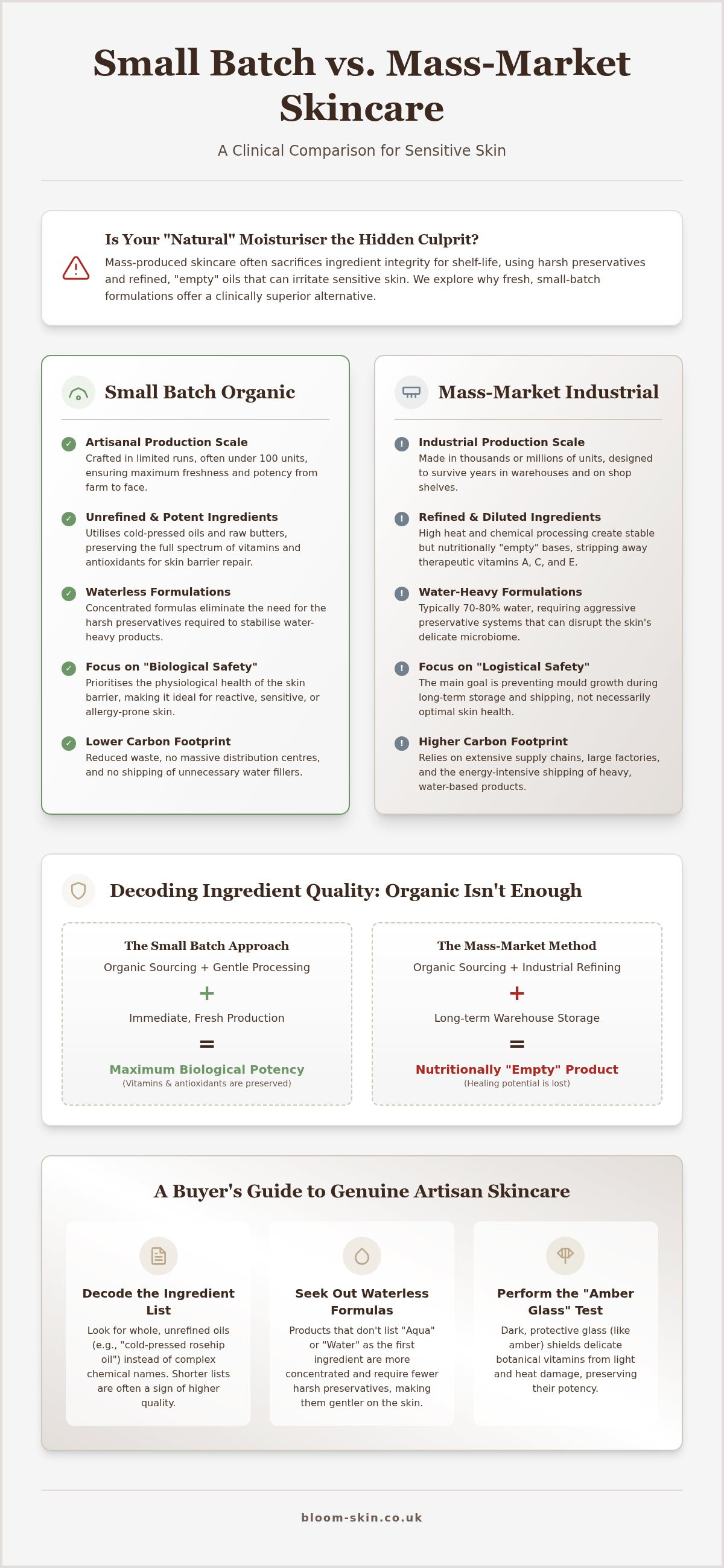
Industrial skincare relies on high heat and heavy refining to create uniform, scentless bases that stay stable for half a decade. This process often kills the very vitamins (A, C, and E) that your skin needs for barrier repair. In contrast, the artisan scale focuses on gentle processing. By avoiding extreme temperatures, small batch organic beauty preserves the complex antioxidant profiles of ingredients like rosehip or sea buckthorn. This smaller scale also reduces the carbon footprint, as there is no need for massive distribution centres or the excessive shipping of water-heavy fillers.
Why 'Organic' Isn't Enough on Its Own
It's a common myth that any product with an organic seal is automatically superior. However, if an organic oil is refined, bleached, and deodorised to suit a mass-production line, much of its healing potential is lost. The true power of botanical skincare lies in the synergy between certified organic sourcing and the immediate, small-batch timing that captures ingredients at their biological peak. Without this timing, you're often left with an organic product that is safe, but ultimately "empty" of the nutrients required for genuine skin transformation.
Myth vs Reality: Is Mass-Market Skincare Actually Safer?
Big labs often rely on the assumption that scale equals safety. It's a comforting thought, but the reality is more complex. Whilst industrial manufacturers have massive testing budgets, their primary goal is often "logistical safety"—ensuring a product won't grow mould after spending six months in a shipping container and another two years on a shop shelf. This requires aggressive preservative systems that can be incredibly taxing on reactive skin.
In contrast, small batch organic beauty prioritises "biological safety". By producing in limited runs, makers can use fewer, higher-quality ingredients that don't need to be chemically fortified for a three-year lifespan. When a formulation is led by a Registered Nurse, the focus shifts from industrial stability to the physiological needs of the skin barrier. It's about creating a safe haven for those with severe allergies or eczema who have been let down by "clinically tested" mass-market options that still contain hidden irritants.
The Hidden Cost of Long Shelf Lives
Mass-market creams are usually 70-80% water. This makes them breeding grounds for bacteria, necessitating the use of potent biocides. These harsh chemicals don't stop working once they touch your face; they can continue to disrupt your skin's delicate microbiome long after application. Small-batch alternatives often lean into waterless stability. By removing the water, we remove the need for aggressive preservatives. If you're struggling with a compromised barrier, switching to a waterless barrier repair balm can offer the relief your skin is craving without the chemical cocktail.
Transparency and the Supply Chain
There's a significant difference between a faceless corporation and an artisan maker who stands behind every jar. Accountability is built into the batch number. In 2026, consumers are rightfully wary of "greenwashing". It's helpful to look at the FDA's definition of organic cosmetics to understand that the term itself doesn't always guarantee safety or regulation in the way many assume. This is why direct founder contact is so vital; it provides a level of transparency that mass-market brands can't match.
Small-batch brands can react almost instantly to new safety data or ingredient concerns. If a specific botanical is found to be more effective in its unrefined state, an artisan maker can pivot their next batch in days. A global brand might take years to reformulate and clear old inventory. This agility builds a level of trust that a mass-market lab simply cannot replicate. You aren't just a customer; you're part of a transparent, intentional supply chain where the person making the product actually knows your skin's name.
The Science of Freshness: Why Ingredient Integrity Matters
Freshness in skincare isn't just about a pleasant scent; it's a matter of biological efficacy. Botanical extracts and cold-pressed oils possess a biological half-life, meaning their therapeutic potency begins to dwindle the moment they are extracted. When products endure the long, arduous journey of mass shipping, they are frequently exposed to fluctuating temperatures and harsh light. These environmental stressors are catastrophic for delicate vitamins such as A, C, and E, which are essential for repairing a compromised skin barrier. By the time a mass-produced cream reaches your bathroom, its "active" ingredients may have already lost their ability to heal.
The UK artisan movement has responded by prioritising protective packaging and rapid distribution. You'll notice that small batch organic beauty brands almost exclusively use amber glass. This isn't merely a stylistic choice; amber glass acts as a filter, blocking harmful UV rays that would otherwise trigger the degradation of unrefined oils. This commitment to ingredient integrity ensures that the raw, potent energy of the plants is preserved until the very moment it touches your skin.
Unrefined vs. Refined: The Nutrient Gap
Mass-market brands often "refine" their oils to ensure a consistent colour and a neutral scent. Whilst this makes for a uniform product, it strips away the sterols, polyphenols, and essential fatty acids that reactive skin needs. Unrefined shea butter and seed oils retain their natural, earthy qualities and their full healing profile. For a deeper look at how these raw materials support your recovery journey, you can explore The Ultimate Guide to Barrier Balm. These unrefined nutrients provide the building blocks for a resilient, healthy complexion that refined alternatives simply cannot match.
Oxidation: The Silent Enemy of Face Oils
When oils sit in a warehouse for years, they are prone to oxidation. Rancid oils are pro-inflammatory, meaning they can actually cause the very redness and irritation you are trying to soothe. The made-to-order model of artisan makers means you receive products weeks, not years, after they were blended. By minimising the time between pressing and application, small-batch production prevents lipid peroxidation in skincare, ensuring that the oils remain therapeutic rather than inflammatory.
Waterless Formulations and Skin Health
Removing water, which is often the primary ingredient in industrial beauty, is the ultimate "freshness hack" for sensitive skin. Water requires emulsifiers to blend with oils and aggressive preservatives to prevent microbial growth. By choosing waterless balms, you're receiving a 100% concentrated dose of skin-repairing lipids. This is particularly beneficial for those suffering from dermatitis and eczema, as it eliminates the need for the synthetic additives that often trigger flare-ups, providing a pure and potent solution for chronic sensitivity.
A Buyer’s Guide to Identifying Genuine Small Batch Brands
Finding a brand that truly honours the philosophy of small batch organic beauty requires a discerning eye. In a market saturated with industrial "shelf-fillers," the evidence of quality is often hidden in plain sight. It starts with the ingredient list. Whilst mass-market products almost always lead with water (aqua), a dedicated artisan maker will frequently prioritise nutrient-dense seed oils or unrefined plant butters at the very top of the label. This ensures that the majority of what you're applying to your skin is active and therapeutic, rather than a cheap filler used to bulk out a formula.
The "Amber Glass" test is another vital signal. If a brand sells high-active botanical oils in clear plastic bottles, they've likely prioritised cost-cutting over ingredient respect. Light is the enemy of potency, and authentic small-batch brands invest in sustainable amber glass to shield their meticulous formulations from degradation. It's a silent promise that the maker values the biological integrity of the raw materials over the convenience of cheaper packaging.
Red Flags in 'Natural' Skincare
Beware of "artisan-washing," where global corporations use hand-drawn fonts and rustic storytelling whilst operating from massive automated factories. A significant red flag is the presence of synthetic fragrances, often listed simply as "parfum." If a product claims to be organic but contains hidden synthetics, it's a sign of a compromised supply chain. Similarly, vague "botanical" claims without mentioning specific, unrefined oils suggest a lack of transparency. If the packaging is plastic and the shelf life is over two years, it's highly unlikely to be a genuine small-batch product.
The Value of the Founder’s Story
A brand's story should offer more than just a pretty narrative; it should provide a foundation of safety and expertise. In the UK, we're seeing a rise in "Professional Makers" whose backgrounds in nursing or clinical care add a layer of accountability to their craft. This medical perspective ensures that every stir and pour is guided by an understanding of skin physiology and the skin barrier. Always check for local UK production. If a brand cannot tell you exactly where their products are blended or who is doing the blending, you might be looking at a white-labelled import rather than a product made with personal integrity.
When you choose a brand led by a professional with a clinical background, you're opting for a safe haven for your skin. If you're ready to experience the difference that intentional, nurse-led formulation makes, you can browse our full range of small-batch balms and oils. A true maker will always welcome your questions about sourcing, batch dates, and ingredient purity with total transparency.
Conscious Craftsmanship: The Bloom Skin Small Batch Philosophy
At Bloom Skin, the transition from the hospital ward to the apothecary bench was a natural progression. My years as a Registered Nurse taught me that the skin is more than just a surface; it's a dynamic, living organ that requires respect and precise care. This clinical perspective is the heartbeat of our small batch organic beauty philosophy. We don't believe in the "one size fits all" approach of industrial labs. Instead, we embrace a production scale that allows for meticulous oversight of every unrefined oil and raw botanical extract that enters our studio.
The decision to remain 100% waterless is perhaps our most significant clinical choice. Whilst mass-market brands use water to create volume, we view it as a liability for those with dermatitis and eczema. By removing water, we bridge the gap between clinical relief and luxury self-care. This choice eliminates the need for the harsh synthetic preservatives and emulsifiers discussed earlier in this article, allowing our award-winning barrier repair balms to deliver a concentrated, pure dose of healing lipids. We house these formulations in amber glass to ensure that the biological potency I demand as a professional is exactly what you receive at home.
Handcrafted for Sensitivity
Our Intensive Night Balm and Cleansing Oils are born from a desire to soothe without compromise. We purposefully avoid synthetic fragrances and aggressive essential oil blends that often lead to the "greenwashing" confusion found on the high street. Every batch is an intentional blend of unrefined, organic ingredients chosen for their ability to nurture the most reactive complexions. This same philosophy of gentle, effective protection extends to our mineral-based range, which you can explore in our guide to Natural Sun Balm UK. By handcrafting in the UK, we maintain a level of ingredient integrity that mass production simply cannot replicate.
Your Ritual, Our Intention
Choosing small batch organic beauty is about more than just skin health; it's an invitation to slow down. When you use a product that has been hand-poured with intention, your morning routine transforms into a mindful self-care ritual. You're no longer just applying a cream; you're participating in a philosophy of care that values quality over mass discard. Our commitment to plastic-free, sustainable packaging reflects a deep respect for the planet that provides our raw materials. By choosing Bloom Skin, you're supporting a purpose-driven business that operates with personal integrity, ensuring that your path to clear skin is as kind to the environment as it is to your barrier.
Embracing a Future of Intentional Skin Health
The journey to clear, comfortable skin often begins with a shift in perspective. We've explored how the biological potency of unrefined oils is preserved through limited production cycles and why the aggressive preservatives of the mass market are no longer the only way to ensure safety. Choosing small batch organic beauty isn't just a trend for 2026; it's a commitment to the physiological needs of your skin barrier and the health of our planet. By prioritising waterless formulations and eco-friendly amber glass, we ensure that every application is as fresh and effective as the day it was blended.
You deserve a skincare ritual that offers both clinical reliability and the gentle care of an artisan maker. If you're ready to move away from industrial "shelf-fillers" and experience the relief of award-winning, Registered Nurse formulated care, I invite you to take the next step. Experience the difference of nurse-led, small-batch skincare; shop the Bloom Skin collection today. Your skin has an incredible ability to heal when it's given the right tools. I'm honoured to help you find that path toward a more resilient, radiant future.
Frequently Asked Questions
Is small batch organic beauty more expensive than high street brands?
Small-batch products often have a higher initial price point because they prioritise expensive, unrefined ingredients over cheap water-based fillers. However, because these formulations are concentrated and waterless, you use far less product per application. This makes the cost per use highly competitive over time. You aren't paying for massive marketing budgets or "shelf-fillers" but for the raw material integrity that actually heals your skin.
How long does small batch skincare actually last without synthetic preservatives?
Most small-batch products remain stable and potent for 6 to 12 months after opening. By removing water and using natural antioxidants like Vitamin E or rosemary extract, we maintain stability without the need for aggressive biocides. This timeframe ensures you use the product whilst its biological activity is at its peak. It aligns perfectly with a typical daily skincare routine, ensuring nothing sits on your shelf for years.
Why is amber glass better for organic skincare products?
Amber glass is essential for small batch organic beauty because it filters out specific wavelengths of light that trigger the oxidation of botanical oils. Whilst clear glass or plastic allows UV rays to reach the product, amber glass acts as a protective shield. This preservation is vital for keeping delicate vitamins and fatty acids intact. It ensures your skincare remains therapeutic from the moment it leaves our studio until it reaches your vanity.
Can I use small batch products if I have severe eczema or dermatitis?
Yes, small-batch products are often a safer haven for reactive skin because they eliminate common triggers like synthetic fragrances and harsh preservatives. Formulations led by a clinical professional focus on barrier repair and physiological relief rather than just scent or texture. By avoiding the industrial chemicals found in mass-market options, you significantly reduce the risk of a flare-up whilst providing the lipids your skin needs to heal.
What does 'waterless skincare' mean and why is it beneficial?
Waterless skincare refers to formulations that contain 0% water, consisting entirely of active botanical oils, butters, and waxes. This is beneficial because it removes the need for emulsifiers and the strong preservatives required to prevent bacterial growth in water-based creams. It results in a more concentrated product. For those with a compromised skin barrier, it provides a protective, lipid-rich shield that isn't diluted by fillers.
How can I tell if a brand is truly 'small batch' or just marketing that way?
You can identify a genuine maker by looking for batch numbers, direct founder transparency, and the absence of generic "parfum" on the label. Truly small-scale brands often manufacture in the UK in limited runs of fewer than one hundred units. If a brand cannot tell you who made your specific jar or where the ingredients were sourced, they may be "artisan-washing" a mass-produced, white-labelled product to look small.
Are unrefined oils better for the skin than refined oils?
Unrefined oils are significantly better because they retain the polyphenols, sterols, and vitamins that are typically lost during industrial refining. Refined oils are often bleached and deodorised to create a uniform, scentless product for mass production. By choosing unrefined ingredients, you're giving your skin the full therapeutic profile of the plant. This is vital for effective barrier repair and long-term skin health.
Why does a nurse-founded brand matter for my skincare routine?
A nurse-founded brand brings a deep understanding of skin physiology and clinical safety to the artisanal process. It ensures that every small batch organic beauty product is guided by an expert who understands the "why" behind ingredient interactions and skin reactions. This background bridges the gap between clinical relief and natural wellness. It offers a trustworthy guide for those who have struggled to find products that don't cause irritation.