

Natural Shampoo for Sensitive Scalp: A UK Buyer’s Guide for 2026
Finding a natural shampoo that genuinely calms a sensitive scalp can feel like a thankless task. You meticulously choose a product labelled “natural,” “gentle,” or “organic,” only to find the familiar itch, tightness, and redness returning. It’s a frustrating cycle that leaves many people in the UK wondering if true relief is even possible.
The truth is, scalp relief isn’t found in a simple “natural” label, but in the clinical integrity and purity of the ingredients within the bottle—or the bar. It’s about understanding the difference between mass-produced nature-identical synthetics and potent, unrefined botanicals chosen with a nurse’s precision. This guide will help you navigate the confusing world of natural hair care, identify the true culprits behind your irritation, and discover a more traditional, gentle path to a calm, healthy scalp.
Understanding Sensitive Scalp: Why Your Current Shampoo Might Be the Culprit
A sensitive scalp is not just a minor inconvenience; it's a sign that your skin's protective barrier is compromised. This delicate ecosystem, known as the acid mantle, is responsible for defending against environmental aggressors and locking in moisture. When it's disrupted, usually by harsh chemicals, the result is the inflammation, itching, and flaking that you know all too well.
- A Compromised Skin Barrier: At its core, scalp sensitivity is a dermatological issue. Harsh surfactants, the foaming agents found in most commercial shampoos, strip away the scalp’s natural oils (sebum). This action damages the lipid barrier, leaving the underlying skin exposed and vulnerable to irritation. For a deeper understanding of how to care for this vital layer, it's helpful to learn about repairing and protecting your skin barrier, a principle that applies to your scalp just as it does to your face.
- The "Natural" Label Deception: In the UK, the term "natural" is not legally regulated in cosmetics. This allows many brands to use the word for marketing purposes whilst their formulas still contain synthetic fragrances, harsh preservatives, and nature-identical chemicals that can trigger reactions. This practice, known as greenwashing, is a major source of confusion for consumers seeking genuinely gentle products.
- The Scalp Microbiome: Your scalp is home to a complex community of microorganisms that play a crucial role in its health. Aggressive cleansing disrupts this delicate balance, potentially allowing less desirable microbes to flourish, which can exacerbate conditions like dandruff and dermatitis.
- The "Detox" Period: When you switch from synthetic-heavy products to a truly natural hair care routine, your scalp may go through an adjustment phase. Years of silicone build-up can leave hair feeling heavy or greasy at first, as your scalp's sebum production works to rebalance itself. This is temporary and a sign that your scalp is beginning to heal.
Identifying Scalp Sensitivity vs. Dandruff
It’s easy to confuse the dry flakes of a sensitive scalp with dandruff, but they often have different causes and require different care. Understanding the distinction is the first step towards finding the right solution.
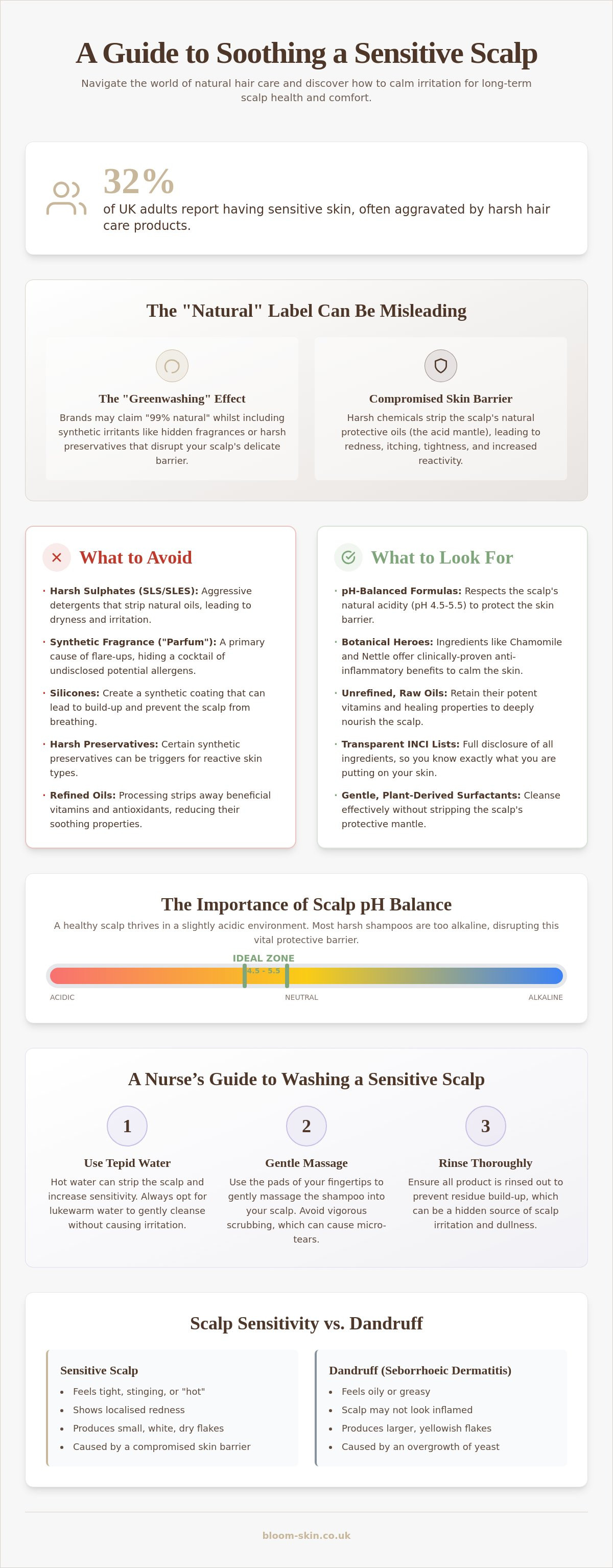
Dandruff, often a result of seborrhoeic dermatitis, is typically caused by an overgrowth of a yeast-like fungus called Malassezia. This results in larger, oily, yellowish flakes and is often accompanied by inflammation. In contrast, sensitivity-related flaking is usually caused by dryness and irritation. The flakes are smaller, white, and look more like dust. Other symptoms of sensitivity include a feeling of tightness after washing, stinging sensations when applying products, and localised patches of redness.
If your symptoms are severe, persistent, or include weeping sores, it is always best to consult a GP or dermatologist. However, for many, the discomfort can be managed and resolved by carefully changing their hair care routine.
The Problem with "High Street" Natural Brands
Even well-intentioned natural brands sold in major retailers face challenges that can compromise their formulas for truly sensitive skin. The demands of mass production often lead to choices that prioritise shelf life and consistency over therapeutic potency.
- Harsh Preservatives: To ensure a product remains stable for years on a warehouse shelf, strong preservatives are often necessary. Some of these, like methylisothiazolinone, are known contact allergens that can cause significant skin reactions.
- Refined and Processed Oils: To keep costs down and achieve a uniform consistency, many large brands use refined oils. This process involves high heat and chemical solvents that strip the oils of their most valuable components—the vitamins, antioxidants, and fatty acids that soothe and heal the skin.
- Hidden Synthetic Fragrances: The single word "parfum" or "fragrance" on an ingredient list can hide a cocktail of hundreds of synthetic chemicals. These are among the most common triggers for allergies and scalp irritation, yet they are ubiquitous in mass-market "natural" products.
The Science of Soothing: Key Ingredients for Reactive Scalps
True scalp relief comes from ingredients that work in harmony with your skin's natural biology. Instead of stripping the scalp, a truly natural shampoo should cleanse gently whilst delivering nourishing, anti-inflammatory compounds that help rebuild the skin barrier and calm irritation from the source.
- Botanical Heroes: Look for ingredients rich in fatty acids that mimic your scalp’s own sebum, such as Shea Butter, Jojoba Oil, and Olive Oil. These oils help to replenish the lipid barrier without clogging pores, providing both moisture and protection.
- The Traditional Approach: Saponified Oils vs. Modern Detergents: Many modern "natural" shampoos are still detergent-based, using milder surfactants instead of SLS. An older, more traditional method involves using soap-based cleansers, like a shampoo bar. These are made through saponification, a natural chemical reaction between oils and an alkali. Whilst this results in a higher pH than the scalp's acid mantle, it creates a wonderfully gentle cleanser that effectively removes dirt without stripping the scalp's protective oils. The key is to follow it with the correct post-wash care to rebalance the pH.
- The Power of Unrefined Ingredients: Unrefined, cold-pressed oils and butters retain the full spectrum of vitamins, antioxidants, and phytonutrients that are lost during industrial refining. These active compounds are what give the ingredients their therapeutic, skin-soothing properties.
- Anti-Inflammatory Plant Extracts: Nature provides a wealth of calming extracts. Ingredients like Nettle, Chamomile, and Calendula have been used for centuries to reduce redness, soothe itching, and promote a healthy, balanced scalp environment.
Why Cold-Pressed and Unrefined Matters
The distinction between a refined and an unrefined ingredient is perhaps the most important concept to grasp when choosing a product for a sensitive scalp. The method of extraction determines the potency and healing power of the final ingredient.
Cold-pressing is a mechanical extraction process where oils are squeezed from seeds or nuts without the use of high heat. This gentle method preserves the "soul" of the plant—its delicate vitamins, enzymes, and antioxidants remain intact. This is in stark contrast to conventional processing, which uses heat and chemical solvents to extract the maximum amount of oil, destroying its most beneficial properties along the way. In essence, unrefined oils are the most potent form of botanical therapy for your skin.
Essential Oils vs. Synthetic Fragrances
For those with reactive skin, fragrance can be a minefield. However, there is a profound difference between synthetic "parfum" and pure, therapeutic-grade essential oils.
Synthetic fragrances are complex chemical mixtures designed solely for scent, and they are a leading cause of contact dermatitis and allergic reactions. In contrast, genuine essential oils, when used in very low, safe concentrations, can offer significant benefits for the scalp. For example, oils like Lavender and Rosemary not only provide a gentle, natural aroma but also possess antimicrobial and anti-inflammatory properties that can help soothe the scalp and promote healthy hair growth. At Bloom Skin, we avoid all synthetic fragrances, choosing only the highest-quality essential oils in careful, nurse-led formulations to ensure they are safe even for those with extreme reactivity.
Decoding the Label: What to Avoid in Your Hair Care Routine
Learning to read an INCI (International Nomenclature of Cosmetic Ingredients) list on the back of a product is the most empowering skill you can develop in your search for a gentle shampoo. It allows you to see past the marketing claims on the front and understand what you are actually putting on your scalp.
- Look Beyond "Sulphate-Free": While avoiding harsh sulphates is a crucial first step, it is only the beginning. Many sulphate-free shampoos simply replace SLS with other, slightly milder detergents that can still be irritating to a compromised skin barrier over time.
- The Impact of Silicones: Silicones (look for ingredients ending in "-cone," "-conol," or "-siloxane") are plastics that coat the hair shaft to make it feel smooth and look shiny. However, they do not rinse away easily and can build up on the scalp, blocking follicles, trapping debris, and preventing moisture from penetrating. This suffocates the scalp and can lead to irritation and itchiness.
- Hidden Alcohols and Preservatives: Not all alcohols are bad, but simple drying alcohols like SD alcohol, denatured alcohol, or isopropyl alcohol can strip the scalp of moisture and cause irritation. Similarly, certain preservatives, while necessary, can be potent allergens. Small-batch production often allows for the use of gentler, more natural preservation systems.
The "Big Three" Irritants to Bin
If your scalp is reactive, there are three main categories of ingredients that should be immediately eliminated from your routine. These offer no therapeutic benefit and are the most common culprits behind scalp sensitivity.
- Sodium Lauryl Sulphate (SLS) & Sodium Laureth Sulphate (SLES): These are aggressive, inexpensive detergents prized for the rich, foamy lather they produce. Unfortunately, that lather comes at a cost. They are known irritants that strip the scalp's protective barrier, leading to dryness, inflammation, and rebound oil production.
- Parabens (e.g., Methylparaben, Propylparaben): Used as preservatives, parabens have been a subject of debate due to their potential to mimic oestrogen and disrupt the endocrine system. For sensitive skin, they are also a known cause of allergic reactions and contact dermatitis.
- Synthetic Colours and Dyes: Often listed as "CI" followed by a number (e.g., CI 75470), artificial colours serve a purely aesthetic purpose. They are derived from petroleum or coal tar and have no place in a functional hair care product, often causing unnecessary irritation for sensitive individuals.
Why Small-Batch Production Offers Better Safety
Choosing products from a small-batch, artisanal business offers an inherent layer of safety and quality control that is difficult for large-scale factories to replicate. The entire philosophy is different, focusing on potency over mass production.
Small batches mean ingredients are purchased more frequently and are therefore fresher and more potent. This approach reduces the need for heavy-duty preservatives and stabilisers. Furthermore, an independent UK business offers complete traceability; the maker knows exactly where each ingredient has come from. This meticulous, hands-on process significantly reduces the risk of cross-contamination and ensures that every single product meets the highest standards of purity and care.
A Nurse’s Guide to Washing a Sensitive Scalp
As a nurse, my approach to skin health is simple: treat the scalp with the same gentle respect you give the delicate skin on your face. Irritation is often caused not just by the products we use, but by how we use them. Adopting a mindful, gentle washing technique can dramatically reduce inflammation and allow your scalp the space it needs to heal.
Beyond technique, it's vital to acknowledge holistic factors. Stress is a major trigger for inflammatory skin conditions, including scalp flare-ups. A poor diet, lacking in essential fatty acids, can also compromise your skin's ability to maintain a healthy barrier. True healing comes from a combination of the right products, the right method, and nurturing your body from the inside out.
The Gentle Washing Technique
This method is designed to cleanse thoroughly without causing physical or chemical stress to your already-reactive scalp. It works beautifully with traditional, solid shampoo bars.
- Step 1: Saturate and Prepare. Before even reaching for your shampoo, make sure your hair is completely saturated with tepid—never hot—water. Hot water can strip natural oils and increase sensitivity. Thoroughly wet hair allows the shampoo to distribute more easily, meaning you need less product.
- Step 2: Create a Lather in Your Hands. Instead of rubbing a shampoo bar directly onto your head, which can tangle hair, work it between your wet hands to create a rich, creamy lather. Then, apply the lather to your scalp.
- Step 3: Massage with Finger Pads, Not Nails. Gently massage the lather into your scalp using only the soft pads of your fingertips. Use slow, circular motions to lift away dirt and stimulate blood flow. Never scratch with your nails, as this creates micro-tears in the skin, inviting further irritation and inflammation.
- Step 4: The "Double Wash" Method. For a truly deep clean without stripping, wash your hair twice. The first wash helps to loosen and remove product build-up and excess oil. Rinse it out, then apply a second, smaller amount of lather. You’ll notice the second wash produces a much richer foam, which cleanses the hair and scalp more effectively. Rinse thoroughly until the water runs completely clear.
Frequency and Post-Wash Care
How you care for your hair and scalp after washing is just as important as the wash itself. Over-washing is a common mistake that can perpetuate a cycle of irritation.
- Wash Less Frequently: Washing every day can trigger "rebound" oiliness, as your scalp overproduces sebum to compensate for being constantly stripped. Try to extend the time between washes, aiming for every 2-3 days, or whatever feels comfortable for you.
- Pat, Don’t Rub: After rinsing, gently squeeze excess water from your hair and pat it with a soft towel (a microfibre towel is ideal). Aggressive rubbing can damage the hair cuticle and irritate the scalp.
- Restore Your Scalp’s Natural pH: Because traditional soap-based shampoo bars have an alkaline pH, it can be beneficial to follow with a simple, mildly acidic rinse. This helps to close the hair cuticle, reduce frizz, add shine, and instantly restore the scalp's protective acid mantle. Simply dilute one tablespoon of apple cider vinegar in 500ml of cool water, pour it over your hair and scalp after your final rinse, and let it sit for a minute before rinsing it out with cool water.
- Pre-Wash Treatment: For an extra layer of protection and nourishment, consider integrating a high-quality hair oil for sensitive scalp as a pre-wash treatment. Massaging a few drops into your scalp an hour before washing can help to soothe irritation and deeply moisturise the skin.
Discovering Bloom Skin: Handcrafted Hair Care for Ultimate Relief
Bloom Skin was born from my own personal struggle as a nurse and mother with severe allergies and sensitive skin. I grew tired of "natural" products that were still filled with hidden irritants and failed to deliver on their promises. I knew there had to be a better, more honest way to care for reactive skin, so I began crafting my own solutions, grounded in my medical knowledge and a deep respect for the potency of pure, unrefined botanicals.
- Our Commitment to Purity: We handcraft our products in small batches, which allows us to use the freshest, most vibrant organic ingredients. Our shampoo bars are concentrated, waterless formulas, meaning they are packed with active ingredients and last much longer than their liquid counterparts—a choice that is both effective and sustainable.
- The Luxury of Amber Glass: For our liquid products, like our oils, we exclusively use amber glass packaging. This is not just an aesthetic choice; it is a clinical one. Amber glass protects the delicate, unrefined ingredients within from UV light degradation, ensuring they remain as potent and effective from the first use to the last.
- A Small-Batch Ethos: Our commitment to small-batch production ensures that every shampoo bar and every bottle of oil meets the highest clinical standards of safety and quality. It is a slow, intentional process that puts the health of your skin above all else.
Our Nurse-Led Formulation Philosophy
My medical background is the foundation of every product we create. It informs our "less is more" approach, where we choose fewer, higher-quality ingredients to minimise the risk of reaction and maximise therapeutic benefit. We meticulously research each cold-pressed oil and organic butter for its specific skin-soothing properties. Our formulas are crafted for those who, like me, have been let down by standard "natural" products and are searching for something with true integrity.
Sustainable Luxury for Your Bathroom Centrepiece
We believe that caring for your sensitive skin should be a beautiful ritual, not a clinical chore. The sensory experience of using a product made with pure botanicals can transform your daily routine into a moment of mindful self-care. Beyond the product itself, our commitment to sustainability is unwavering, from our plastic-free shampoo bars to our eco-friendly shipping materials. When you choose Bloom Skin, you are not just buying a product; you are investing in a philosophy of gentle, effective, and conscious care.
Explore our handcrafted hair care collection today and feel the difference that nurse-led, botanical integrity can make.
Frequently Asked Questions
- Will a natural shampoo for sensitive scalp still lather?
- Yes, but the lather may feel different. A traditional, soap-based shampoo bar creates a dense, creamy lather from its saponified oils, rather than the big, airy bubbles produced by synthetic sulphates. This creamy lather cleanses effectively without stripping the scalp.
- How long does it take for a sensitive scalp to stop itching after switching?
- This varies, but many people feel initial relief within the first few washes. It can take 2-4 weeks for the scalp to fully rebalance its oil production and for inflammation to subside, especially if you are transitioning from products containing silicones.
- Can I use natural shampoo if I have dyed or colour-treated hair?
- Yes, but it's important to choose the right kind. Soap-based shampoo bars are generally considered colour-safe. However, because they have a higher pH that can open the hair cuticle, it is crucial to follow with an acidic rinse (like diluted apple cider vinegar) to seal the cuticle, protect the colour, and add shine.
- Is natural shampoo better for hair loss associated with scalp irritation?
- If hair loss is linked to scalp inflammation, blocked follicles, or contact dermatitis from harsh chemicals, switching to a genuinely natural, anti-inflammatory shampoo can create a healthier environment for hair growth and may help reduce shedding.
- What is the difference between a natural shampoo and a "pH balanced" one?
- A "pH balanced" shampoo is typically a detergent-based liquid formula with an acidic pH (around 4.5-5.5) to match the scalp's acid mantle. A traditional natural shampoo, like a soap-based shampoo bar, is naturally alkaline. While different in pH, it cleanses very gently. The key is to use an acidic rinse afterwards to easily restore the scalp's optimal pH.
- Do I need a conditioner if I use a high-quality natural shampoo?
- Many people find that after the transition period, they no longer need a separate conditioner. High-quality shampoo bars are made with nourishing, superfatted oils that cleanse without stripping, leaving hair soft. An acidic rinse also acts as a natural detangler and cuticle-smoother.
- How often should I wash my hair if I have a very reactive scalp?
- Listen to your scalp. We generally recommend washing every 2-3 days. Over-washing can perpetuate the cycle of irritation, while under-washing can lead to build-up. Find the balance that leaves your scalp feeling calm and clean.
- Are Bloom Skin products safe to use during pregnancy or for children?
- Our products are formulated with gentle, natural ingredients. However, as some products contain essential oils, we always recommend consulting with your doctor or midwife before introducing new products during pregnancy. For children, a patch test is always the best practice.