

Cleanser for Dermatitis: A Nurse-Led Guide to Soothing Reactive Skin (2026)
Why does the very act of trying to clean your face often feel like you're setting your skin on fire? If you've ever winced at the sharp sting of a morning wash or felt your cheeks tighten into a mask of persistent redness, you're certainly not alone. With over 73 million people across major markets currently managing atopic dermatitis, finding a truly effective cleanser for dermatitis is often a source of deep anxiety. It's exhausting to trust brands that seem to lack professional clinical expertise, leaving you to decode complex ingredient lists whilst your skin remains reactive and raw.
I understand this struggle intimately, both from my years as a Registered Nurse and as a maker of purposeful, small-batch skincare. You shouldn't have to choose between cleanliness and comfort. This guide promises to reveal how you can cleanse your skin without stripping its vital barrier, focusing on the benefits of waterless, oil-based solutions. We'll explore the "why" behind your flare-ups and introduce a simple, reliable ritual designed to leave you with a calm, hydrated complexion. It's time to move past the stinging and reclaim a sense of quiet confidence in your daily care.
Key Takeaways
- Understand why the traditional "squeaky clean" sensation indicates barrier damage and how to preserve your skin's acid mantle whilst cleansing.
- Discover why a waterless, oil-based cleanser for dermatitis is a more effective, non-stripping alternative to harsh foaming surfactants.
- Learn the clinical importance of maintaining a slightly acidic skin pH to prevent future flare-ups and support a healthy microbiome.
- Recognise the benefits of choosing unrefined, cold-pressed plant oils over highly processed mineral oils for deeply reactive skin.
- Master a simple, nurse-led ritual that uses potent, lipid-mimicking botanicals to leave your complexion feeling calm and hydrated.
Understanding the Dermatitis Cleansing Dilemma
For anyone living with the heat and irritation of reactive skin, the bathroom sink can feel like a place of conflict. You want to wash away the day, but the very act of cleansing often triggers a flare-up. Understanding Dermatitis starts with recognising that your skin isn't just a surface to be scrubbed. It's a delicate, living ecosystem that requires a gentle touch. A true cleanser for dermatitis isn't just about what it removes; it's about what it leaves behind. It should lift impurities and environmental pollutants whilst keeping your acid mantle, that thin, protective film of oils and amino acids, completely intact.
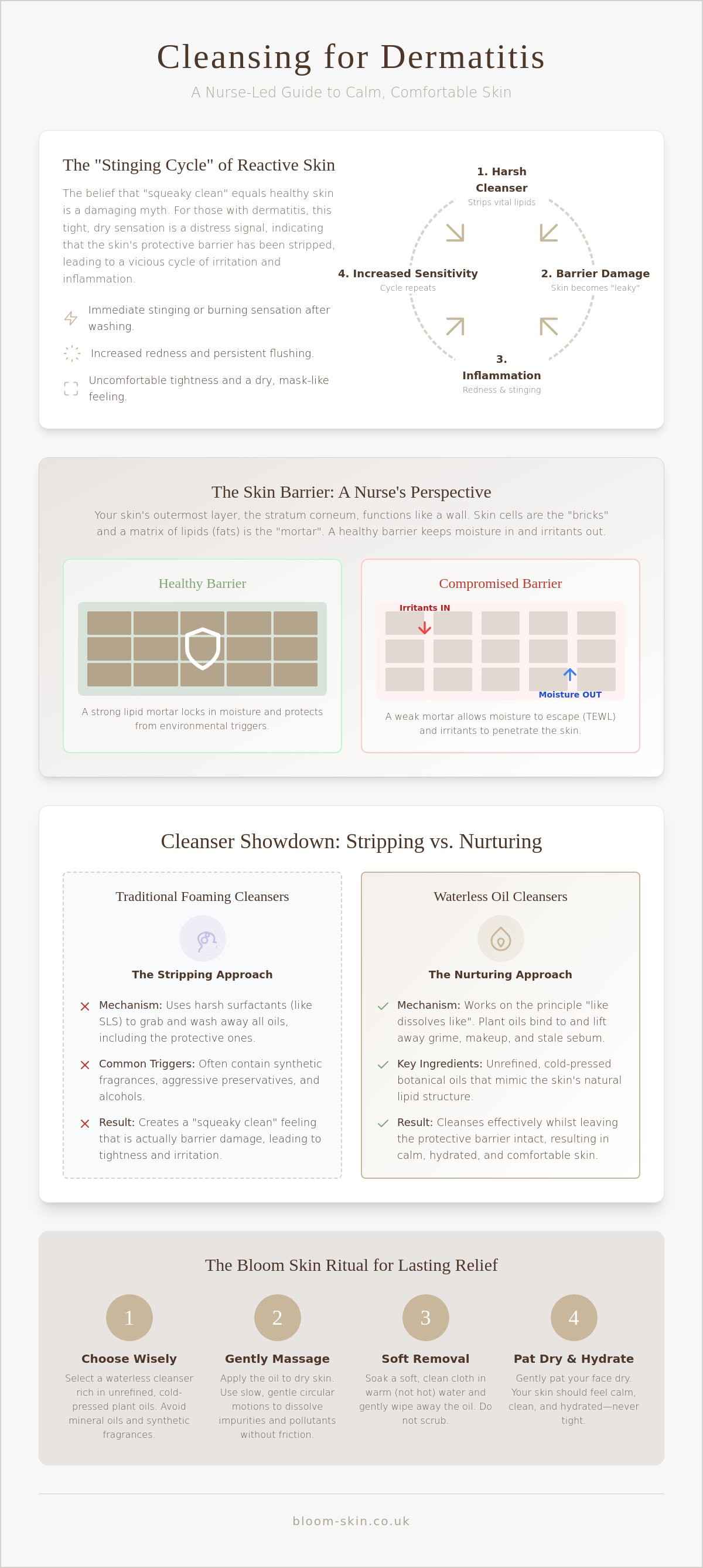
We've been conditioned to believe that "squeaky clean" skin is the goal. In reality, that tight, friction-heavy sensation is a distress signal. It means you've stripped away the vital lipids that hold your skin cells together. For those with dermatitis, this begins a punishing "stinging cycle." You try a new product, it burns, your skin becomes more inflamed, and the barrier weakens further. It's a heavy emotional toll that leaves many feeling hopeless and wary of any new skincare ritual. Your skin isn't a problem to be solved with aggression; it's a living organ that needs nurturing.
Common Triggers in High-Street Cleansers
Many mass-produced bottles on supermarket shelves contain ingredients that are simply too aggressive for sensitive complexions. Synthetic fragrances, often hidden under the vague term "parfum," are leading causes of contact sensitivity. Then there's Sodium Lauryl Sulphate (SLS). This foaming agent is brilliant at cutting through grease on a frying pan, but it's far too harsh for a compromised skin barrier. Additionally, water-based cleansers require complex preservative systems to prevent bacterial growth. These chemicals, whilst necessary for shelf life, can be incredibly irritating to already raw or broken skin.
Recognising the Signs of Barrier Compromise
How do you know if your current routine is failing you? If you feel immediate tightness, itching, or a surge in redness after patting your face dry, your barrier is likely compromised. This damage leads to Transepidermal Water Loss (TEWL), where essential moisture evaporates from the deeper layers of your skin. This leaves you in a paradox: your skin feels oily yet dehydrated and flakey at the same time. Choosing a dedicated cleanser for dermatitis that mimics the skin's natural lipids is the first step in halting this moisture drain and inviting long-term relief.
The Science of the Skin Barrier: A Nurse’s Perspective
As a Registered Nurse, I've spent years observing how the body heals itself. In the clinical world, we often describe the stratum corneum, the outermost layer of your skin, using the "bricks and mortar" model. Your skin cells act as the bricks, whilst a complex matrix of lipids, ceramides, and fatty acids serves as the mortar. When this structure is sound, it keeps essential moisture in and environmental triggers out. However, for those living with chronic irritation, this barrier is often naturally "leaky." This means the mortar is thin or missing, allowing irritants to seep into the deeper layers and trigger an immune response.
Maintaining the correct environment is vital for repair. The Science of the Skin Barrier shows that our skin thrives at a slightly acidic pH of around 5.5. This acidity supports the skin's microbiome and ensures the enzymes responsible for barrier repair can function correctly. The acid mantle is the skin’s first line of defence against British weather and pollutants. When you use a harsh, alkaline cleanser for dermatitis, you disrupt this delicate balance, forcing your skin into a state of constant stress rather than recovery.
The Role of Lipids in Cleansing
The secret to effective cleansing for reactive skin lies in a simple scientific principle: like dissolves like. Traditional foaming cleansers use surfactants to grab onto oils and wash them away, often taking your skin's natural "mortar" with them. In contrast, plant-based oils bind to surface grime, stale sebum, and pollutants without tearing at the skin’s physical structure. This method ensures you remove what shouldn't be there whilst leaving your protective fats intact. Our Cleansing Oil is intentionally designed to support this lipid-mimicking approach, offering a thorough clean that feels like a soothing treatment.
Why Small-Batch Production Matters for Potency
Mass production is often the enemy of high-quality skincare. Large-scale manufacturing frequently relies on high-heat processing to speed up bottling, but this heat can degrade the delicate antioxidants and vitamins found in unrefined oils. We take a different path. By handcrafting our products in small batches right here in the UK, we preserve the "life-force" of our botanical ingredients. We use amber glass to protect these potent, cold-pressed oils from light degradation, ensuring that every drop remains as effective as the day it was pressed. This meticulous process guarantees that your cleanser for dermatitis contains the highest possible concentration of active, barrier-supporting nutrients.
Oil Cleansing vs. Foaming Cleansers: Which is Best for Dermatitis?
There is a distinct, hurried energy to foaming cleansers. They promise a "deep" clean through the use of surfactants, which are molecules designed to lower the surface tension of water so it can mix with oils and lift them away. Whilst this feels efficient, it's often a blunt instrument for a reactive barrier. For those with atopic dermatitis, these foaming agents don't just take the dirt; they aggressively strip away the very lipids we discussed in the previous section. This leaves the skin feeling parched and vulnerable. Choosing an oil-based cleanser for dermatitis shifts the mechanics of washing from a stripping action to a supportive one.
A common myth suggests that applying oil to the face will lead to congestion or leave a greasy film. In reality, high-quality plant oils are remarkably similar to our own skin's sebum. They bind to old oils, sunscreens, and pollutants, allowing them to be gently wiped away without disrupting the delicate acid mantle. This process doesn't cause spots; instead, it balances the skin's natural oil production. The sensory experience is also transformed. Rather than the sharp, stinging rush of foam, oil cleansing offers a quiet, calming ritual that encourages you to slow down and treat your skin with intention.
The Case for Waterless Skincare
Most high-street cleansers are primarily composed of water. Whilst water is life-giving, in a skincare bottle, it requires a complex cocktail of preservatives and emulsifiers to remain shelf-stable and free from bacteria. These additives are frequent triggers for dermatitis flare-ups. Waterless skincare is a revelation for the truly sensitive because it removes the need for these aggressive preservative systems. Because these formulas are undiluted, they are significantly more concentrated. You use less product, yet your skin receives a more potent dose of raw, unrefined nutrients. This approach reduces the risk of microbial contamination whilst ensuring every drop serves a purpose.
Comparing Cleansing Rituals
If you wear SPF or light makeup, the "double cleanse" method can be particularly beneficial. Start by massaging a small amount of oil into dry skin to dissolve debris. Instead of splashing with cold water, which can shock reactive tissue, use a soft, warm cloth to gently lift the oil away. This mechanical action is far kinder than scrubbing. For those whose skin remains parched even after a gentle wash, following up with The Ultimate Guide to Barrier Balm provides the necessary blueprint for sealing in moisture and reinforcing that vital "mortar" we aim to protect.
How to Choose the Right Cleanser for Reactive Skin
Scanning the skincare aisle when you have sensitive skin often feels like walking through a minefield. Many large brands use terms like "hypoallergenic" or "dermatologically tested" as marketing shields, yet these labels don't always guarantee safety for a compromised barrier. When you're searching for a cleanser for dermatitis, the quality of the raw materials is what truly determines success. You should always prioritise unrefined, cold-pressed oils over highly processed mineral oils. Whilst mineral oils are inert, they're essentially "dead" ingredients that sit on top of the skin without providing any nutritional support for the repair process we've discussed.
You also need to understand the distinction between "unscented" and "fragrance-free" for your own safety. An unscented product might still contain masking chemicals to hide the smell of raw ingredients, whereas fragrance-free indicates a total absence of synthetic perfumes. Pay close attention to the packaging, too. Unrefined botanical oils are delicate and prone to light-induced oxidation. If a product is sold in clear plastic, the ingredients may already be degrading. Amber glass is the gold standard. It acts as a protective shield, keeping anti-inflammatory botanicals like calendula and jojoba stable and effective until the very last drop.
Ingredients to Seek Amongst the Labels
- Jojoba oil: This isn't actually an oil but a liquid wax that most closely resembles our skin’s natural sebum, making it highly compatible with a reactive barrier.
- Castor oil: It's a powerhouse for removing debris and pollutants whilst remaining incredibly gentle on inflamed or broken patches.
- Vitamin E: This natural antioxidant helps stabilise unrefined formulas and provides a soothing, protective layer for the skin.
The "Small Batch" Quality Check
Large global conglomerates often lose traceability in their supply chains, sourcing ingredients in such vast quantities that quality can fluctuate between batches. Choosing a brand that chooses to organise its production in limited runs ensures a much higher level of integrity. This artisanal approach allows for the careful selection of every organic ingredient, ensuring they're at their most potent when they reach your bathroom. A truly nurse-formulated product combines this meticulous maker's spirit with a deep clinical understanding of skin physiology. If you're ready to transition to a more intentional routine, you can explore our nurse-led Cleansing Oil here to see the difference that unrefined quality makes for your complexion.
The Bloom Skin Ritual: Gentle Cleansing for Lasting Relief
Managing reactive skin shouldn't feel like a clinical chore. It's entirely possible to transform your morning and evening wash from a source of anxiety into a genuine moment of self-care. When you use a thoughtfully formulated cleanser for dermatitis, you aren't just removing the day's grime; you're actively participating in your skin's healing process. This ritual is about slowing down and giving your barrier the respect it deserves. It is a shift from treating your face as a problem to be solved towards nurturing it as a living ecosystem that requires patience and kindness.
Our Cleansing Oil is the heart of the Bloom Skin philosophy. It represents a transition from my years in clinical nursing to the world of artisanal, small-batch making. Every bottle carries what I call the "Nurse’s Promise." This is a commitment to total transparency, deep empathy for your struggle, and a reliance on ingredients that have a clear, evidence-based purpose. We don't use fillers or synthetic fragrances that might trigger a flare-up. Instead, we rely on the raw, unrefined potency of nature to do the heavy lifting, ensuring your skin feels supported rather than stripped.
Our Handcrafted Cleansing Oil
The texture of our signature oil is velvety and rich, designed to glide over inflamed patches without the need for tugging or friction. You'll notice a subtle, earthy scent that comes directly from the organic, cold-pressed botanicals rather than a laboratory-created perfume. This sensory experience is intentional, grounding you in the purity of the raw materials. We bottle this liquid gold in amber glass to ensure the integrity of the oils remains undisturbed by light. This meticulous attention to detail ensures that your cleanser for dermatitis is as potent when you finish the bottle as it was the day we poured it in our UK studio.
Completing the Routine
Cleansing is only one part of the journey. To ensure lasting relief, we recommend pairing your oil with our Barrier Repair Balm. Whilst the oil protects your lipids during the wash, the balm acts as a secondary shield, sealing in moisture and providing the mortar your skin might be lacking. Consistency is the final, vital ingredient. Reactive skin thrives on predictability; a steady, gentle ritual is far more effective than constantly switching products in search of a miracle cure. By sticking to a simple, reliable routine, you allow your skin the time it needs to repair and find its balance.
As you move forward, remember that healing is a journey, not a sprint. Your skin is resilient, and with the right support, it can find its way back to a state of calm. I created Bloom Skin to be a safe haven for those who have been let down by the high street. You're not just buying a product; you're joining a community that values quiet confidence and the power of gentle, intentional care. I'm honoured to be part of your journey to a healthier, more comfortable complexion.
Reclaiming Calm for Your Reactive Skin
Finding a reliable cleanser for dermatitis shouldn't be a cycle of trial and error that leaves your face feeling raw. We've explored how moving away from aggressive foaming surfactants and embracing lipid-mimicking, unrefined oils can preserve your skin's vital acid mantle. By choosing waterless formulas and prioritising small-batch quality, you ensure that every drop of your skincare remains potent and protective. This nurse-led approach isn't just about cleaning; it's about providing the mortar your barrier needs to thrive.
Our award-winning Cleansing Oil is handcrafted in the UK and housed in protective amber glass to maintain its maximum purity. It represents a bridge between clinical expertise and artisanal care, offering you a transparent and empathetic path to lasting relief. Shop our Nurse-formulated Cleansing Oil for sensitive skin to begin a ritual that respects your skin's living ecosystem. You deserve a complexion that feels comfortable and calm every single day. With a little patience and the right botanical support, your skin's natural resilience will return.
Frequently Asked Questions
Is oil cleansing safe for dermatitis-prone skin?
Oil cleansing is not only safe but often the most beneficial method for reactive skin. Because "like dissolves like," unrefined plant oils lift away impurities without disrupting the delicate fats that make up your skin barrier. This approach avoids the harsh surfactants found in foaming products, which can exacerbate dryness and inflammation for those seeking a gentle cleanser for dermatitis.
How often should I wash my face if I have active dermatitis?
You should aim to cleanse no more than twice daily, with many finding that a single thorough wash in the evening is sufficient. Over-washing can strip the skin’s natural protection, even with the gentlest formulas. During a severe flare-up, you might choose to skip a morning cleanse entirely, opting instead for a splash of lukewarm water to maintain your skin's equilibrium.
Can I use soap to cleanse my face if I have eczema?
Traditional bar soaps are generally too alkaline for eczema-prone skin, often possessing a pH that is much higher than the skin’s natural 5.5. This alkalinity can cause immediate tightness and irritation. Whilst we do offer handcrafted soaps for the body, for the delicate facial area, an oil-based formula is a far superior choice for maintaining barrier integrity and preventing moisture loss.
What is the best temperature for water when cleansing reactive skin?
Lukewarm water is the safest choice for reactive complexions. Hot water is a known vasodilator that can increase redness and strip away protective lipids, whilst very cold water can shock the skin and fail to remove oil-based debris effectively. Aim for a temperature that feels neutral to the touch, and always use a soft, clean cloth to gently pat the skin dry rather than rubbing.
Will a natural cleanser sting my dermatitis patches?
Natural ingredients are not inherently non-stinging, as many "green" brands use high concentrations of essential oils or citrus extracts that can burn raw skin. However, a waterless, fragrance-free oil cleanser is designed to be inert and soothing. By removing the water and complex preservatives found in many high-street options, the risk of that familiar stinging sensation is significantly reduced.
How do I know if my skin barrier is damaged?
A damaged barrier typically manifests as persistent redness, a feeling of tightness immediately after washing, and skin that feels both oily and flakey. You may also experience a stinging sensation when applying products that previously felt comfortable. This is a sign of Transepidermal Water Loss (TEWL), where your skin is unable to retain moisture due to gaps in its protective "mortar" layer.
Should I double cleanse if my skin is very sensitive?
Double cleansing is only necessary if you've been wearing heavy SPF or makeup throughout the day. If your skin is in the midst of a flare-up, a single, methodical oil cleanse is usually enough to remove impurities without causing unnecessary friction. If you do choose to double cleanse, ensure both steps are surfactant-free to avoid the cumulative stripping effect that often triggers sensitivity.
What ingredients should I avoid in a cleanser for dermatitis?
You must be vigilant about avoiding Sodium Lauryl Sulphate (SLS), synthetic fragrances, and drying alcohols like Ethanol or Isopropyl Alcohol. These are notorious for compromising the skin barrier. Additionally, be wary of harsh preservatives like methylisothiazolinone, often found in water-based products, which are common triggers for contact dermatitis. Opting for a waterless cleanser for dermatitis naturally eliminates the need for many of these problematic additives.