

Chemical-Free Lip Balm UK: The Best Natural Choices for Sensitive Lips (2026)
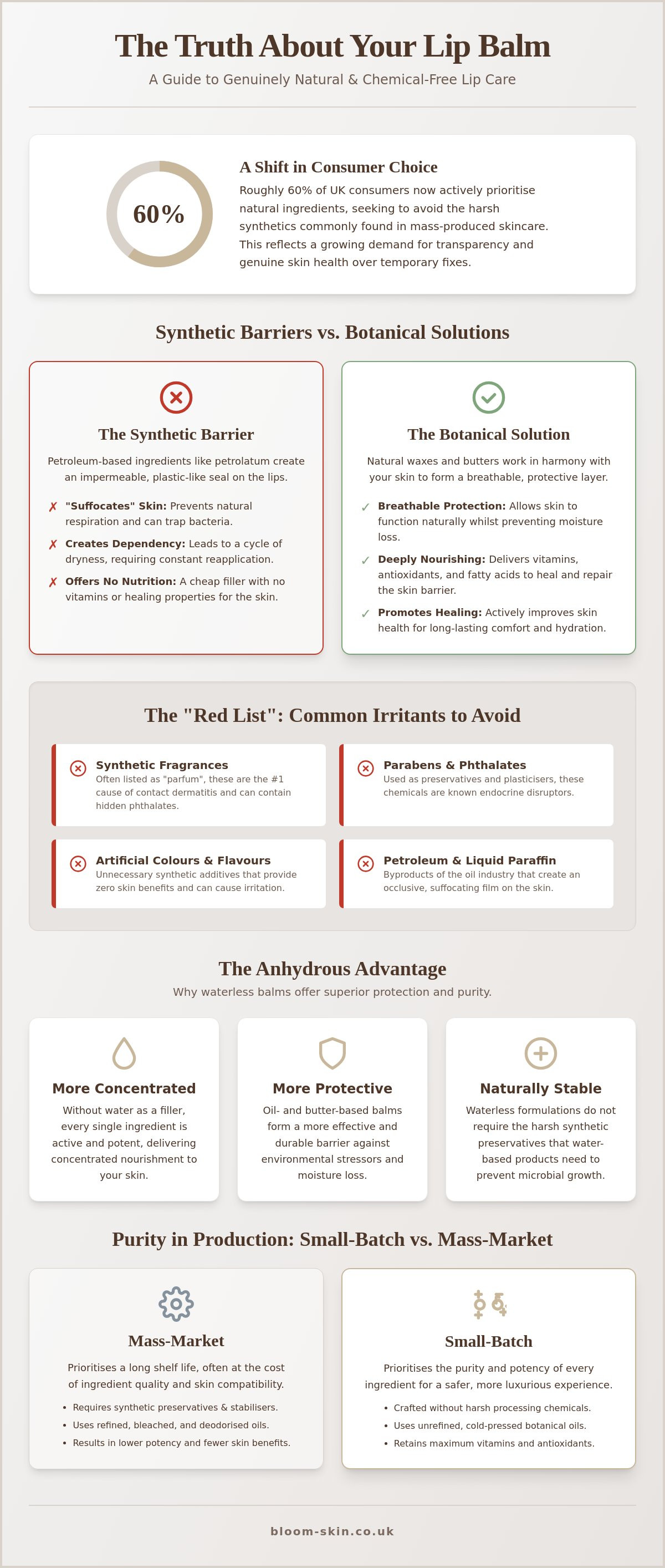
That petroleum-based balm you have been reapplying all morning might actually be the reason your lips feel so parched. It is a frustrating cycle many of us know well. You reach for a favourite tube to soothe an allergic reaction or chronic tightness, only to find yourself needing another coat just thirty minutes later. If you are tired of deciphering complex ingredient lists whilst your skin remains irritated, you are certainly not alone. Roughly 60% of UK consumers now prioritise natural ingredients to avoid the harsh synthetics found in mass-produced products.
You deserve a self-care ritual that feels safe and deeply nourishing. This guide will show you why unrefined, waterless botanicals are the superior choice for barrier repair and how to find a truly chemical free lip balm uk that respects your skin's delicate balance. We will explore the science of anhydrous formulations and the latest 2026 safety standards to ensure your daily lip care provides the long-lasting, quiet confidence of healthy, hydrated skin. By understanding the "why" behind your ingredients, you can move away from temporary fixes toward a luxury experience that truly heals.
Key Takeaways
- Understand the clinical distinction between synthetic petroleum-based ingredients and the potent botanical compounds found in a high-quality chemical free lip balm uk.
- Identify the hidden "Red List" irritants, such as synthetic fragrances and phthalates, that are often the root cause of persistent contact dermatitis and lip sensitivity.
- Explore the benefits of waterless, anhydrous balms that offer a more concentrated and protective layer whilst remaining stable without harsh synthetic additives.
- Learn how to match specific botanical ingredients like calendula or unrefined oils to your unique skin concerns, whether you need simple hydration or deep barrier repair.
- Discover why small-batch, nurse-formulated skincare prioritises ingredient potency and transparency to offer a safer, more luxurious self-care experience.
Understanding "Chemical-Free" Lip Balm in the UK: A Nurse’s Perspective
I have often seen the confusion on my clients' faces when we discuss skincare ingredients. Technically, every substance on Earth is a chemical, from the pure water we drink to the oxygen we breathe. However, when people search for a chemical free lip balm uk, they are usually looking for an escape from synthetic, laboratory-made irritants that cause more harm than good. My clinical background has taught me that not all compounds are created equal. Whilst a botanical oil is a complex chemical structure designed by nature to nourish, a synthetic paraffin is a byproduct of the oil industry designed for shelf-life rather than skin health. I've seen the confusion. Choosing a chemical free lip balm uk is about more than just avoiding toxins; it's about embracing a philosophy of care that prioritises the skin's biological needs.
The UK market is currently undergoing a profound shift. Consumers are no longer satisfied with vague "natural" claims. They want transparency. This is why we focus on the "why" behind every ingredient, moving away from the mass-produced norm where hidden irritants like synthetic fragrances often hide behind the word "parfum". My nurse-led approach involves scrutinising these formulations to identify why a product might be causing a flare-up rather than providing relief. The fundamental purpose of Lip balm is to provide a protective layer that prevents moisture loss, yet the choice between synthetic and botanical bases determines whether your skin actually heals or simply stays coated.
The Problem with Synthetic Barriers
Many high-street options rely on petrolatum or liquid paraffin. These ingredients are popular because they are cheap and virtually indestructible. But they create a "false" barrier. They sit on top of the skin, effectively "suffocating" the lips and preventing natural respiration. This leads to the "addictive" cycle where your lips feel drier the moment the balm wears off, prompting you to reapply constantly. While synthetic occlusives create an impenetrable, plastic-like seal that can trap heat and bacteria, natural waxes like beeswax or plant butters provide a breathable, protective layer that allows the skin to function whilst locking in moisture.
Why "Small-Batch" Matters for Purity
Mass production is a game of stability. To ensure a product stays exactly the same on a shop shelf for years, manufacturers often add synthetic preservatives and stabilisers. In my experience, these are the very things that trigger reactive skin. By crafting in small batches, we don't need those harsh processing chemicals. We can use unrefined, cold-pressed oils that retain their original vitamins and antioxidants. These raw materials might look less "perfect" than their bleached, refined counterparts, but they are far more potent for a damaged skin barrier. It's the difference between a processed food and a home-cooked meal; the intention and the quality of the raw materials change everything.
Ingredients to Avoid: The "Red List" for Sensitive Lips
Identifying a true chemical free lip balm uk requires us to look past the marketing claims and deep into the fine print of the ingredient list. As a nurse, I have spent years helping people manage reactive skin; I have seen how even high-street "medicated" balms can trigger persistent redness and peeling. The skin on your lips is incredibly thin and lacks the sebaceous glands found elsewhere on your body. This makes it uniquely vulnerable to the "Red List" of irritants that many mass-market manufacturers use to cut costs or enhance scent. Currently, synthetic fragrances stand as the primary cause of contact dermatitis on the lips. These complex chemical mixtures are often hidden behind the single word "parfum," yet they can strip your delicate skin barrier in seconds.
Beyond fragrances, we must consider the long-term impact of what we apply to our mouths. Parabens and phthalates are frequently used as preservatives and plasticisers, but they are also recognised endocrine disruptors that have no place in a daily care routine. Similarly, artificial colours and synthetic "flavour" chemicals provide a sensory experience at the expense of skin health. Following the American Academy of Dermatology recommendations, it is vital to avoid ingredients that cause a burning or stinging sensation. This includes chemical sunscreens like oxybenzone and octinoxate, which can be particularly sensitising for those with existing allergies.
Drying Alcohols and Menthol
It's a common mistake. Many people believe the cooling "tingle" of menthol, camphor, or peppermint means the product is working. In reality, that sensation is often a micro-inflammatory response. These ingredients, along with drying alcohols used as preservatives, can lead to chronic peeling and a damaged barrier. If your skin is truly reactive, choosing fragrance-free and menthol-free options is the only way to break the cycle of irritation. For those seeking immediate relief without these triggers, our range of small-batch lip balms focuses on calming botanicals instead of synthetic tricks.
Mineral Oils vs. Plant Oils
Mineral oils and petrolatum are byproducts of the oil industry. Whilst they are effective at locking moisture in, they offer zero nutritional value to the skin and carry a heavy environmental cost. On a UK INCI label, look for terms like "Paraffinum Liquidum" or "Cera Microcristallina" to spot these hidden synthetics. In contrast, cold-pressed plant oils are "bio-available," meaning they contain fatty acids and vitamins that your skin can actually recognise and use for repair. Transitioning to a chemical free lip balm uk based on unrefined butters ensures you are feeding your skin rather than just coating it in plastic.
The Benefits of Anhydrous (Waterless) Lip Care
When you look at the back of a standard moisturiser, "aqua" is usually the first ingredient listed. Whilst water is essential for life, it can be a significant liability in skincare for those with reactive skin. Anhydrous, or waterless, lip care contains zero water. This choice isn't just about texture; it's a fundamental decision for safety and potency. Because bacteria thrive in watery environments, any product containing water must also include a robust system of synthetic preservatives to prevent mould and spoilage. By formulating without water, we can bypass these harsh biocides entirely, making it much easier to create a truly chemical free lip balm uk that won't trigger a flare-up.
Beyond the safety profile, waterless balms offer exceptional value for money. In a standard tube, you might be paying for a significant percentage of water that simply evaporates upon application. With an anhydrous formula, every single gram consists of active, skin-loving nutrients. This concentration makes the balm far more effective at shielding your lips from the unpredictable British weather. Whether it's the biting coastal winds or the damp chill of a London winter, a waterless balm provides a superior, long-lasting barrier. It adheres to the skin, providing a resilient shield that stays put far longer than its diluted counterparts.
Adhering to UK cosmetic safety regulations ensures that all products on the market meet a baseline of safety. However, for those of us with extreme sensitivities, meeting the baseline isn't enough. We need formulations that go further by eliminating the "fillers" that serve the manufacturer's bottom line more than the customer's skin. Choosing a chemical free lip balm uk that is also anhydrous is a commitment to concentrated, purposeful skincare that respects your body's natural boundaries.
Concentrated Nutrition for the Skin Barrier
In our workshop, we view unrefined shea butter and cocoa butter as the gold standard for lip health. Unlike refined fats that have been bleached and deodorised, unrefined butters retain their natural, earthy scent and a dense profile of vitamins A, E, and F. These nutrients are vital for repairing damaged tissue and supporting the skin's natural elasticity. When you compare this to synthetic waxes or mineral oils, the difference in nutrient density is staggering. Natural butters don't just sit on the surface; they deliver the biological building blocks your skin needs to heal itself from within.
Sustainable Packaging: Beyond the Formula
Our philosophy of care extends to the vessel that holds our balms. We chose amber glass for a very specific reason: it acts as a natural filter against UV light. This preserves the delicate, unrefined botanical oils and ensures they remain potent without the need for synthetic stabilisers. Moving away from plastic isn't just a trend for us; it's a way to reduce the environmental burden on the UK landscape. For our customers, using an amber glass jar transforms a simple habit into a luxury, eco-conscious ritual. It feels substantial, intentional, and entirely safe, reflecting the quiet confidence that comes from knowing exactly what you're putting on your skin.
Buying Guide: Choosing the Right Lip Balm for Your Needs
Finding the right chemical free lip balm uk is a deeply personal journey that starts with understanding your skin's unique language. Are your lips simply feeling a bit tight after a breezy afternoon, or are they chronically sore, red, and inflamed? Identifying the difference between simple dehydration and a compromised skin barrier is the first step toward relief. If you're dealing with a damaged barrier, you need more than just a quick slick of moisture; you need a restorative blend that mimics your skin's natural lipids to encourage deep healing.
Matching specific ingredients to your concerns can transform your results. For instance, I often recommend calendula-infused oils for those dealing with raw, angry skin because of its exceptional soothing properties. Conversely, if you're looking for a reliable shield against the elements, unrefined beeswax is a favourite choice. It provides the structural integrity needed to lock in hydration without the "plastic" feel of synthetic waxes. For those with a history of scent sensitivities, sticking to fragrance-free options is the most reliable way to avoid the cycle of irritation we discussed earlier.
Our routine should also adapt to the shifting British seasons. A lighter balm might suffice in the humid summer months, but as we move into the damp, drizzly days of autumn, your lips will crave a richer, more protective layer. Transitioning your lip care ensures you're always one step ahead of the weather, maintaining a soft, healthy smile year-round.
Protection for the British Outdoors
UK winters are uniquely challenging because they are often as damp as they are cold. This moisture can strip the lips just as effectively as a biting wind. You need a formula that remains supple in your pocket and won't become hard or waxy when the temperature drops. For coastal walkers or mountain hikers, integrating a natural sun balm uk into your kit is essential. Even under grey, overcast skies, UV rays can reflect off the water or frost, causing unexpected damage to sensitive skin. A thicker, more resilient barrier balm is an absolute necessity for any outdoor enthusiast.
Lip Care for Allergy Sufferers
If you've spent years reacting to high-street products, you've likely learned to be cautious. I always suggest performing a simple patch test on the inner arm before applying any new product to your lips. It's a small step that provides immense peace of mind. It's also vital to recognise that "botanical" doesn't always mean "allergy-free." Certain natural compounds in essential oils can occasionally trigger reactions in very sensitive individuals. This is why seeking out nurse-formulated products is so beneficial; they are crafted with a clinical understanding of how different ingredients interact with reactive skin. If you're ready to find a gentler alternative, you can browse our range of handcrafted lip balms to discover a formula that respects your skin's boundaries.
Bloom Skin: Handcrafted, Small-Batch Lip Luxury
Bloom Skin began not in a corporate boardroom, but in my own kitchen. As a Registered Nurse who has navigated the complexities of severe allergies, I understood that the high-street was often failing those with truly reactive skin. My goal was to move beyond the marketing label of chemical free lip balm uk and create something that offered clinical-level safety with an artisanal, nurturing touch. Today, our award-winning formulations are a testament to that vision. We don't just avoid synthetics; we actively select organic, cold-pressed, and unrefined ingredients that retain their full biological power to heal and protect.
By sticking to a small-batch production model, we maintain a level of oversight that mass production simply cannot match. Every jar is poured with intention. This anhydrous approach ensures that we never have to compromise on potency or introduce synthetic preservatives that might irritate a delicate barrier. It's about providing a safe haven for your skin, backed by professional expertise and a deep empathy for the struggle of chronic dryness. When you open a jar of our balm, you are experiencing the results of meticulous processing and a commitment to purity that respects your body's natural boundaries.
The Multi-Purpose Nature of Bloom Balms
Our balms are designed to be hardworking essentials in your skincare kit. Because we use such high concentrations of unrefined botanicals, our lip care can easily double as a barrier balm for stubborn dry patches on the face or body. Whether it's soothing ragged cuticles or protecting dry knuckles after a day in the garden, the versatility of these raw ingredients is remarkable. You'll find that a single, high-quality botanical balm is often far more effective and nourishing than five different synthetic alternatives. It simplifies your routine whilst providing superior results for your skin.
Join the Bloom Skin Community
When you choose Bloom Skin, you're supporting a woman-owned, family-run UK business that operates with a high degree of personal integrity. We believe in ethical sourcing and sustainable practices, ensuring that our commitment to your health also respects the environment. This is more than just a purchase; it's a choice to support a philosophy of conscious, intentional living. We take pride in being a small-scale maker that prioritises quality over mass production. You can rest assured that your skin is in expert hands, receiving the gentle, effective care it truly deserves. We are here to help you rediscover the quiet confidence of healthy, comfortable lips.
Embrace a Gentler Ritual for Your Lips
Your journey to healthy, hydrated skin doesn't have to be a struggle against complex labels and persistent irritation. By moving away from synthetic "false" barriers and embracing the concentrated power of unrefined, waterless botanicals, you're giving your lips the biological building blocks they need to thrive. We've explored how identifying hidden irritants and matching your care to the damp British climate can break the cycle of chronic dryness once and for all.
Finding a truly chemical free lip balm uk is about more than just avoiding toxins; it's about trusting a process rooted in clinical expertise and artisanal care. Our nurse-founded, award-winning formulations are handcrafted in small batches to ensure maximum potency and safety for reactive skin. Every jar is housed in 100% plastic-free amber glass, preserving the integrity of our raw materials whilst respecting the environment we share. It's time to treat your sensitive lips with the quiet confidence they deserve.
Shop our nurse-formulated, handcrafted lip balms and discover the relief of pure, intentional skincare. You don't have to settle for temporary fixes when nature's finest ingredients are ready to nurture you back to health.
Frequently Asked Questions
Is "chemical-free" lip balm actually possible?
Technically, a 100% chemical-free product is impossible because every physical substance, including water and botanical oils, is made of chemical compounds. When people search for a chemical free lip balm uk, they're usually looking for formulations free from synthetic irritants like petrolatum, parabens, and artificial fragrances. We focus on using pure, plant-based molecules that work in harmony with your skin's biology rather than disruptive, lab-made synthetics that can cause long-term sensitivity.
What is the best lip balm for extremely sensitive lips in the UK?
The best choice for extremely reactive skin is a nurse-formulated, waterless balm that omits all common allergens and synthetic "fillers." Our chemical free lip balm uk options prioritise unrefined butters and cold-pressed oils to provide a protective barrier without the need for harsh preservatives. You should look for fragrance-free and menthol-free recipes, as these are the most frequent triggers for contact dermatitis and persistent inflammation amongst UK consumers with delicate skin.
Why do my lips feel drier when I use certain lip balms?
This often happens because many high-street balms rely on petroleum-based occlusives that create a "false" barrier on the skin's surface. These ingredients sit on top and prevent the lips from breathing, which can eventually lead to a cycle of chronic dehydration. Additionally, ingredients like menthol or camphor cause a cooling tingle that's actually a sign of micro-inflammation, causing the lips to peel and feel tighter once the product wears off.
Are natural lip balms safe for children and babies?
Pure, botanical balms are generally very safe for children, provided they're free from potent essential oils and synthetic additives. Babies have thinner skin that absorbs substances more readily, so a simple formula using organic beeswax and food-grade oils is ideal for their needs. Always perform a small patch test first and choose products that avoid the "Red List" irritants we discussed earlier to ensure their delicate skin stays protected and comfortable.
How can I tell if a lip balm is truly organic and non-toxic?
You should scrutinise the INCI list on the back of the packaging for recognisable plant names rather than complex synthetic codes. Truly non-toxic products won't hide behind vague terms like "parfum," which can contain hundreds of undisclosed chemicals. In the UK, looking for certifications like the Soil Association can provide extra peace of mind, though many small-batch makers use organic ingredients without formal certification to keep their handcrafted products accessible and affordable.
What is the difference between refined and unrefined ingredients in lip care?
Unrefined ingredients are kept in their raw, potent state, retaining all the natural vitamins and antioxidants that are often lost during industrial processing. Refined oils are typically bleached and deodorised to create a "cleaner" look, but this strips away the very nutrients your skin needs for barrier repair. We prioritise unrefined butters because their natural scent and rich texture are signs of a truly nutrient-dense product that offers genuine healing benefits.
Can I use natural lip balm if I have a nut allergy?
It's essential to check the specific botanical sources, as many natural balms use almond, macadamia, or walnut oils as a base. Whilst shea butter is technically a nut product, it's often tolerated by those with nut allergies, but you should always consult your GP if you have a severe sensitivity. We clearly label every ingredient in our small-batch formulations so you can make an informed choice that feels entirely safe for your specific allergy profile.
How long does a small-batch, waterless lip balm typically last?
A single jar of waterless balm typically lasts between six to twelve months because the formula is so concentrated. Since there's no water "filler," you only need a tiny amount to create a resilient, long-lasting barrier against the elements. The absence of water also means the product remains stable for longer without the need for harsh synthetic preservatives, though we recommend using it within a year to enjoy the peak potency of the oils.