

Best Hair Oil for Sensitive Scalp: A Nurse-Led Guide to Soothing Relief (2026)
Why does your "natural" hair treatment often leave your scalp feeling more inflamed than when you started? It's incredibly frustrating to invest in organic remedies only to be met with persistent redness and that familiar, prickly itch. You want to nourish your hair, yet your reactive skin seems to reject almost everything you try. Finding the best hair oil for sensitive scalp shouldn't feel like a gamble with your comfort.
I understand this struggle deeply; it's why I've applied my nursing background to formulate small-batch solutions that prioritise the scalp barrier. In this guide, you'll learn how to navigate the "essential oil trap" and identify the unrefined, botanical elixirs that mirror your skin's natural lipids. I'll show you how a nurse-led approach to waterless, cold-pressed oils can transform your routine into a soothing ritual whilst providing deep relief. We'll explore how to achieve a calm, hydrated scalp and healthier hair growth from a base that feels safe, nurtured, and truly restored.
Key Takeaways
- Identify the common irritants in mainstream products, such as synthetic fragrances and silicones, that frequently disrupt the delicate scalp microbiome.
- Understand why cold-pressed, unrefined botanical oils are the best hair oil for sensitive scalp due to their preserved "living" nutrients and skin-identical lipids.
- Compare the therapeutic properties of Jojoba, Argan, and Hemp oils to determine which unrefined plant extracts best suit your specific scalp sensitivities.
- Learn a gentle, step-by-step pre-shampoo ritual designed to soothe inflammation and restore hair health without over-stimulating reactive skin.
- Discover the clinical benefits of waterless, nurse-formulated elixirs that prioritise ingredient potency and small-batch freshness for maximum safety.
Why Your Scalp is Reactive: The Problem with Mainstream Hair Oils
Many people assume that an itchy scalp is simply "dry" and reach for any bottle labelled as a treatment. However, the scalp is a highly specialised environment where a delicate balance of microbes and lipids resides. When this ecosystem is disrupted, the result is often a reactive, inflamed state that makes finding the best hair oil for sensitive scalp feel like an impossible task. It isn't just about the hair; it's about the living tissue from which that hair grows.
The Role of the Scalp Barrier
Your scalp functions as a protective shield, but it's easily compromised by harsh chemicals and environmental stressors. When the barrier is weakened, you experience Transepidermal Water Loss (TEWL). This is a clinical way of saying your skin can't hold onto its moisture. This dehydration triggers a cascade of inflammation, often manifesting as a persistent, low-level itch or even conditions like Seborrhoeic dermatitis. Much like the principles we apply to facial care in our guide to barrier balm, a compromised scalp needs restorative lipids rather than temporary fixes that only mask the symptoms.
Hidden Irritants in Your Current Hair Care
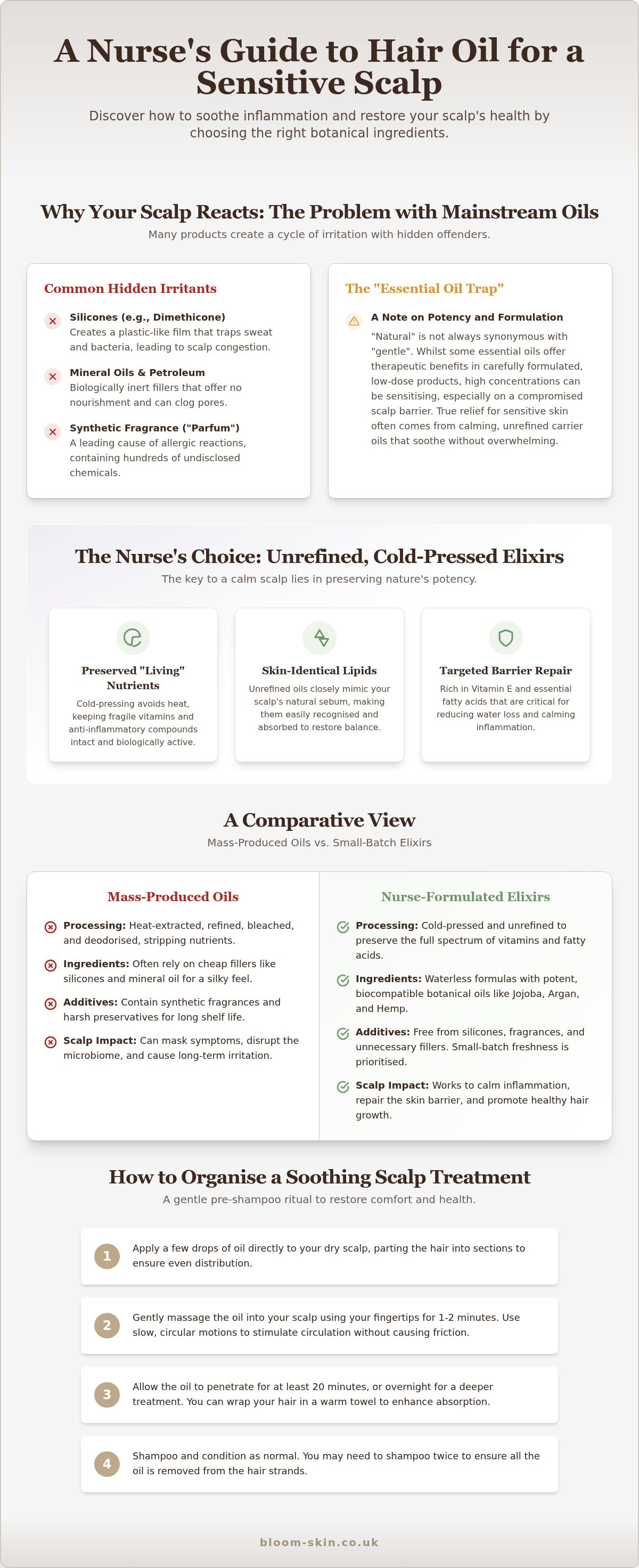
Mass-produced hair oils often rely on cheap fillers and synthetic additives to create a silky feel. These ingredients might make your hair look shiny for a few hours, but they're often the primary culprits behind scalp reactivity. The best hair oil for sensitive scalp should be free from the following common offenders:
- Silicones (like Dimethicone): These create a plastic-like film that can trap bacteria and sweat against the skin, leading to congestion and breakouts.
- Mineral Oils: Derived from petroleum, these are biologically inert and offer no actual nourishment to the skin barrier.
- "Parfum" or Synthetic Fragrance: This is the number one enemy of a reactive scalp. A single fragrance listing can contain hundreds of undisclosed chemicals that trigger allergic contact dermatitis.
In contrast to the mass-production methods used by global corporations, small-batch intentionality ensures that every ingredient serves a purpose. We don't use fillers because your scalp deserves potent, unrefined materials that actually support health rather than just mimicking it. When oils are produced in enormous quantities, they often require harsh preservatives to sit on shop shelves for years, adding another layer of potential irritation for those with reactive skin.
The Essential Oil Trap
It's a common misconception that "natural" is always synonymous with "gentle". Many botanical products fall into what I call the Essential Oil Trap, where they use high concentrations of potent oils like tea tree or peppermint. Whilst these have benefits for some, they are also known allergens and can be incredibly sensitising when applied to a broken or reactive barrier. True relief comes from the quiet, calming power of unrefined carrier oils with the correct therapeutic amount of essential oils that soothe without overwhelming the senses or the skin.
The Nurse’s Choice: Why Cold-Pressed and Unrefined Oils Excel
Choosing the right treatment often feels like a gamble when your skin is reactive. Finding the best hair oil for sensitive scalp requires looking past the marketing and into the clinical reality of how oils are made. Most mass-produced oils are heat-extracted and refined, a process that strips away the very compounds your skin needs to heal. At Bloom Skin, we advocate exclusively for cold-pressed, unrefined oils. An unrefined oil is a nutrient-dense lipid that retains its natural vitamins and antioxidants. By avoiding high temperatures during production, we preserve the "living" nutrients of the plant, ensuring that every drop remains potent and biologically active.
The Science of Unrefined Lipids
Refined oils are often bleached and deodorised to create a uniform, shelf-stable product. Whilst this suits large-scale manufacturing, it's detrimental for those with sensitivities. Unrefined lipids are uniquely effective because they closely mimic the scalp’s natural sebum. They're rich in Vitamin E and essential fatty acids, which are critical for repairing a damaged barrier. Recent research on sensitive scalp diagnosis suggests that maintaining this lipid balance is essential for reducing inflammation and protecting against external irritants. We choose cold-pressing because it's the only way to keep these fragile, anti-inflammatory nutrients intact.
Biocompatibility: Why Your Scalp Recognises These Oils
Your skin doesn't just need moisture; it needs ingredients it recognises. Unrefined oils are biocompatible, meaning they share a similar molecular structure to our own skin cells. This allows them to penetrate deeply into the follicles rather than just sitting on the surface like synthetic silicones. We also prioritise waterless formulations. Traditional creams are often 70% water, which requires complex preservative systems that can trigger flare-ups. By removing water, we provide a concentrated "Hair Elixir" that is both safer and more effective.
To protect these volatile, light-sensitive nutrients, we always house our formulations in amber glass. This commitment to purity ensures that the treatment you apply today is as fresh and potent as the day it was pressed. If you're looking for a gentle way to restore balance, you might find that exploring nurse-formulated botanical care is the missing step in your soothing ritual. This methodical approach to ingredient selection is what separates a standard product from the best hair oil for sensitive scalp.
Best Hair Oil Ingredients for Sensitive Scalps: A Comparative Roundup
When searching for the best hair oil for sensitive scalp, it's easy to get lost in a sea of marketing claims. To cut through the noise, I use a clinical framework based on three pillars: Purity, Potency, and Provenance. Purity ensures the absence of hidden irritants; Potency refers to the concentration of active, unrefined nutrients; and Provenance relates to the care and ethics behind the sourcing. By applying this standard, we can identify which botanical extracts truly support a reactive barrier without causing further distress.
The Top 4 Botanical Elixirs for Sensitivity
Not all plant oils are created equal. Whilst many brands use refined versions of these ingredients to cut costs, the truly therapeutic benefits remain in the unrefined, "raw" state. Here are the four elixirs I recommend for those navigating scalp reactivity:
- Jojoba Oil: Technically a liquid wax, jojoba is the closest biological match to human sebum. It helps to balance oil production without clogging follicles, making it ideal for those whose sensitivity is linked to oily congestion.
- Argan Oil: Often called "liquid gold", unrefined argan is exceptionally rich in phenols and carotenes. These compounds are highly effective at soothing visible redness and calming the heat associated with inflammation.
- Castor Oil: This is a much thicker, more viscous lipid. It acts as a protective barrier for those suffering from severe dryness or flaky patches, providing a dense layer of hydration that locks moisture into the skin.
- Hemp Seed Oil: Boasting a perfect ratio of Omega-3 and Omega-6 fatty acids, hemp seed oil is a powerhouse for strengthening the scalp barrier. It's particularly useful for those whose skin feels thin, tight, or easily broken.
How to Read a Hair Oil Label Like a Pro
The best hair oil for sensitive scalp will always have a transparent, easy-to-read ingredient list. As a nurse, I always tell my clients to look past the front of the bottle and scrutinise the INCI list on the back. Many "luxury" oils are actually built on a base of cheap fillers like sunflower oil or generic vegetable blends. Whilst these aren't necessarily harmful, they lack the specific therapeutic potency of the premium oils listed above.
Pay close attention to where essential oils appear in the list. If they're near the top, the concentration may be too high for a reactive scalp. For those with significant sensitivities, "Fragrance-Free" isn't just a preference; it's a non-negotiable requirement. Even natural fragrances can trigger a flare-up if the barrier is already compromised. Finally, look for the "Small Batch" promise. Because unrefined oils are "living" ingredients, they have a shorter shelf life than their refined, chemically-stabilised counterparts. Handcrafting in small batches ensures that the oil reaching your bathroom is fresh, potent, and at its peak clinical efficacy.
How to Organise a Soothing Scalp Treatment at Home
Transforming your hair care routine into a healing ritual requires more than just the right ingredients; it demands a mindful approach to application. When you've finally sourced the best hair oil for sensitive scalp, the goal is to ensure those unrefined lipids reach the skin barrier without causing mechanical irritation. For a reactive scalp, I always recommend a "less is more" philosophy. Over-manipulating the skin or using excessive amounts of product can lead to congestion. Instead, focus on intentional, gentle movements that encourage the oil to penetrate and soothe.
The Pre-Wash Ritual
This ritual is designed to provide deep nourishment whilst the hair is dry, allowing the oils to bond with the scalp's natural lipids before water is introduced. Follow these steps for a calm, professional-grade treatment:
- Step 1: Sectioning: Use a wide-tooth comb or your fingertips to divide your hair into four manageable sections. This ensures you can apply the oil directly to the scalp rather than just coating the hair shafts.
- Step 2: The "Gentle Pressure" Massage: Dispense a few drops of oil into your palms to warm them. Using the pads of your fingers, apply light, circular pressure to the scalp. This technique boosts local circulation and aids absorption without the friction that triggers redness.
- Step 3: Duration: Allow the oil to rest for 20 to 30 minutes. This provides ample time for the vitamins and fatty acids to work their magic amongst the follicles. There's no need to leave it on overnight; a concentrated, waterless elixir is potent enough to work quickly.
Post-Treatment Care
Cleansing the oil away is just as important as the application itself. To maintain the benefits, use a gentle, sulphate-free shampoo. Apply the shampoo directly to the oiled areas and emulsify with a little water before rinsing. The optimal temperature for rinsing hair is lukewarm, roughly 37 to 38 degrees Celsius, to avoid triggering further inflammation or stripping the scalp’s natural defences. Hot water is a common irritant that can undo the work of your treatment.
Once your hair is clean and damp, you can use a single, tiny drop of the same oil as a finishing serum to smooth frizz and protect the ends. Remember that a healthy scalp also needs protection from environmental stressors. If you're spending time outdoors, consider how you might protect your parting and hairline using a natural sun balm uk to prevent UV-induced sensitivity. For those ready to begin their journey toward a calmer scalp, you can explore our collection of unrefined hair oils to find your perfect match. This methodical, nurse-led approach ensures your search for the best hair oil for sensitive scalp results in long-term relief rather than a temporary fix.
Discover the Bloom Skin Hair Oil: Handcrafted Luxury for Reactive Skin
Bloom Skin was born from a desire to provide a safe haven for those who have been let down by mainstream beauty. Our Hair Oil, or Hair Elixir as we often call it, isn't just another product; it's the result of years spent understanding skin from a clinical perspective. By combining the precision of nursing with the care of artisanal making, we've created what many of our clients consider the best hair oil for sensitive scalp. Every bottle is handcrafted in the UK, ensuring that the unrefined, potent botanicals inside are as fresh as possible when they reach your door.
We believe that freshness is a non-negotiable quality marker. Because unrefined oils are "living" ingredients, their therapeutic value is highest shortly after they've been pressed. This is why our small-batch promise is so vital. We don't produce thousands of bottles to sit in a warehouse for years. Instead, we make what is needed, prioritising the integrity of the nutrients over mass-market convenience. This methodical approach ensures that the anti-inflammatory properties of our botanical extracts remain at their peak when you apply them to your scalp.
The Bloom Skin Difference: Nurse-Led Formulation
Jo’s background as a Registered Nurse informs every decision we make. We don't follow industry trends; we follow the science of the skin barrier. This "Barrier First" approach means we prioritise ingredients that support the scalp's natural defences rather than disrupting them. For users with eczema or highly reactive scalps, our waterless and fragrance-free formulation provides a genuine sigh of relief. We've heard from many customers who had given up on finding a treatment that didn't sting or cause further redness. Their testimonials speak to the power of unrefined lipids and the peace of mind that comes from a professional, nurse-led formulation that understands the nuances of reactive skin.
Sustainability in Every Drop
Our commitment to your health is mirrored by our commitment to the planet. We house our oils in amber glass bottles, a choice that is both aesthetic and functional. Amber glass protects the delicate, unrefined ingredients from light-induced oxidation, ensuring the oil remains effective until the very last drop. As a woman-owned, UK-based business, we take pride in our ethical sourcing and plastic-free shipping. We believe that luxury shouldn't come at the cost of the environment or your skin's comfort.
When you choose a small-batch product, you're choosing transparency and integrity. You're opting for a treatment that has been made with intention, specifically for those who need the gentlest touch. If you're ready to experience the difference that unrefined, nurse-formulated care can make, you can Shop the Bloom Skin Hair Care Collection today. Finding the best hair oil for sensitive scalp is no longer a matter of trial and error; it's about choosing a philosophy of care that puts your scalp's health first.
Embrace a Calmer Scalp and Healthier Hair
Restoring your scalp's health is a journey of choosing purity over convenience. We've explored why unrefined, cold-pressed oils are essential for a reactive barrier and how a methodical, nurse-led approach avoids the irritants found in mass-produced alternatives. By focusing on biocompatible lipids like Jojoba and Argan, you can soothe inflammation whilst encouraging stronger hair growth from a nourished base. Finding the best hair oil for sensitive scalp means prioritising formulations that respect your skin's natural microbiome rather than masking symptoms with synthetic fillers.
You deserve a self-care ritual that feels as safe as it is luxurious. Our award-winning formulations are handcrafted in small batches in the UK. They're 100% waterless and fragrance-free to ensure maximum potency without the risk of flare-ups. It's time to move away from the frustration of reactive skin and toward a routine that offers genuine relief. Explore our Nurse-founded Hair Oil for Sensitive Scalps and discover the difference that clinical expertise and botanical purity can make. Your skin has the power to heal when given the right tools; we're here to guide you every step of the way.
Frequently Asked Questions
What is the best oil for an extremely itchy and sensitive scalp?
Unrefined Jojoba oil is widely considered the best hair oil for sensitive scalp because its molecular structure is almost identical to human sebum. This biocompatibility allows it to soothe the itch and restore the lipid barrier without causing further inflammation. Argan oil is another excellent choice; it's rich in phenols that help to calm visible redness and heat on the skin surface.
Can I leave hair oil on my sensitive scalp overnight?
I don't recommend leaving oil on a reactive scalp overnight. Prolonged exposure can sometimes lead to congestion or trap heat and sweat against the skin, which may trigger a flare-up. A focused treatment of 20 to 30 minutes provides ample time for the unrefined nutrients to penetrate the barrier safely. It's far more effective to have a short, intentional ritual than a long, potentially irritating one. If you are not prone to sensitivity or reactions then overnight can work well too, we are all so unique and what suits one person won’t suit another - start off with quicker sessions and increase if tolerated or desired.
How often should I use hair oil if I have a reactive scalp?
Starting with a once-weekly treatment is usually the best approach for maintaining balance. If your scalp is currently in a flared or particularly dry state, you might increase this to twice a week until the barrier feels more resilient. Consistency is more important than frequency. Listen to your skin; if it feels calm and hydrated, you've found your ideal rhythm.
Will hair oil clog my pores or cause scalp acne?
High-quality, unrefined oils like Jojoba or Hemp seed are non-comedogenic and very unlikely to clog your pores. Scalp congestion is typically caused by synthetic silicones, mineral oils, or heavy waxes found in mass-market products. By choosing plant-identical lipids, you're providing nourishment that the skin can actually absorb and utilise rather than a film that sits on the surface and traps bacteria.
Is rosemary oil safe for a sensitive scalp?
Rosemary essential oil can be quite stimulating and may be too potent for a truly reactive scalp if the concentration is high. Whilst it's popular for supporting growth, I always advise caution. If you wish to use it, ensure it's professionally diluted in a soothing carrier oil like Argan or Jojoba. Bloom Skin uses rosemary oil in therapeutic volumes and even those with sensitive scalps have enjoyed our scalp oil, however you should always perform a patch test behind the ear first to ensure your skin doesn't react to the active botanical compounds.
How do I wash out heavy oils without irritating my scalp further?
The safest way to remove oil is to apply a gentle, sulphate-free shampoo directly to your dry, oiled scalp before you step under the shower. Add a tiny amount of lukewarm water to emulsify the shampoo, which helps break down the lipids more effectively. This method ensures the oil washes away easily without the need for aggressive scrubbing or multiple washes that can strip your natural defences.
Can hair oil help with scalp psoriasis or eczema?
Unrefined oils are excellent for softening the dry scales of psoriasis and providing a protective shield for eczema-prone skin. They work by reducing Transepidermal Water Loss (TEWL), which is often the primary cause of the intense itch associated with these conditions. Whilst they aren't a medical cure, they offer significant symptomatic relief and help to keep the skin barrier supple and protected from external triggers.
What is the difference between a hair elixir and a standard hair oil?
A hair elixir is a concentrated, waterless formulation designed for maximum potency and skin safety. Standard hair oils often rely on refined "filler" oils and synthetic fragrances to achieve a specific scent or price point. An elixir, particularly a nurse-led one, uses only cold-pressed, unrefined botanicals. This ensures the "living" vitamins and antioxidants remain intact, providing a more therapeutic treatment for those seeking the best hair oil for sensitive scalp. At Bloom Skin we have a Scalp Oil and a Hair Elixir named differently for identity - the Scalp Oil is self explanatory and the Hair Elixir is a nourishing smooth and shine oil for lengths - both waterless and concentrated and both effective.